American Paragliding Home Page
Paramotoring and    
Powered Paragliding    

 Why?   Training   Prices   Gallery   Products   Events   Links   Weather 


Miniplane Paramotor

Using the Top 80 Motor from Italy
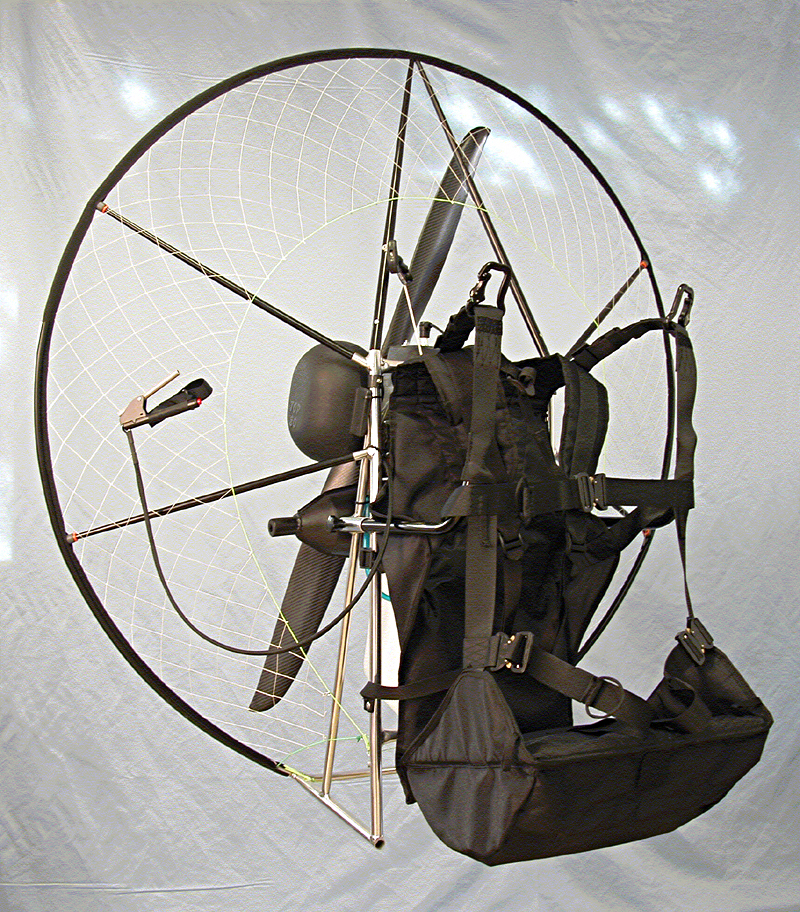
Miniplane Paramotor
115 or 125
$4850
Order Now!

Miniplane 125
with Weight Shift
(see below)
$5250
Order Now!

Above Paramotors
Includes Wood Propeller

Upgrade to Carbon Fiber Propeller:

MAH Propeller Upgrade $150
Regularly $375

Miniplane Carbon-Fiber
Propeller Upgrade $385
Regularly $585

Paramotors:
   Black Hawk
   Fresh Breeze
   Fly Products
   Bailey Aviation
   iFlyer Paramotor
   Miniplane Paramotor
Paramotoring Products:
   Packages
   Wings
   Motors
   Trikes
   Reserves
   Harnesses
   Helmets
   DVD's
   Books
   Accessories
   Gift Certificates
Paragliding Products:
   Main Page
   Harnesses
   Helmets & PTT's
   Reserves
   Boots, Suits & Bags
   T-Shirts & Sweatshirts
   Varios & Altimeters
   Windmeters
   Videos & Books
   Accessories
   Used Equipment

Fly Products ParamotorsThe new generation of light-paramotors is born!

MINIPLANE CONSTRUCTION PHILOSOPHY

The increase in performance of modern paragliders makes it possible to fly with almost one-half the power of a few years ago.

A little two-stroke engine, built with modern technology, can offer more then enough reliable power and much less weight. This makes the critical take-off run easier and safer.

The philosophy of a reliable Minimotor, combined with optimizing the resonance of the exhaust provides the pilot:

  • Light weight
  • Less vibration
  • Easier to start
  • Less fuel; less to carry
  • Less weight means a lighter frame
  • Less weight in flight means a smaller, easier to inflate Paraglider
  • Less weight means running faster, more erect, and under control - not struggling with a heavy load

Following Miniplane's philosophy of SAFETY and RELIABILITY, these engines come complete with:

CENTRIFUGAL FRICTION CLUTCH

  • At Idle, the propeller does not turn (= no push).
  • Easier starting the motor.
  • Easier to inflate the Paraglider without the back blast.
  • A normal pilot can start the motor, inflate the sail, and take-off alone.
  • Less torque on the pilot when accelerating or decelerating.
  • No risk of tearing apart your glider if you blow your launch and the paraglider falls over your head.
  • Easier to reverse inflate the glider, since a turning propeller has a gyroscopic effect which affects your equilibrium when turning into the wind.
  • No vibration waiting for take-off or during thermalling.

LIGHTWEIGHT FRAME

  • Made of aluminum alloy and glass fiber, the best balance between weight and strength.
  • Easy to completely disassemble the cage for convenient transportation.

PROTECTIVE CAGE

  • Since the propeller does not turn at idle, a simpler and lighter cage can be used.
  • Our aluminium and fiberglass cage is strong but flexible, so you can forget about cage replacement after a small mistake.


LARGE DIAMETER PROPELLER

  • This means more efficiency; optimized for ease of running and transport.
  • Less noise because the propeller turns slower.
  • Two blades means you can put it in a sack and transport it with the glider.

HARNESS

  • Miniplane's New system PSF, (no high or low connections) stabilizes the Paraglider, suppresses the gyroscopic effect of the motor and lets you fly "Actively."
  • Since 1996 when they invented this system, 80% of the manufacturers use a similar solution.
  • Unique front extensions for attaching the Paraglider.
  • Provides greater safety in mishaps and a stable position during take-off, flight and landing.
  • Tested by experienced pilots and schools.
  • Simple to put on and adjust.
  • Comfortable, relaxed flight.


REDUCTION

  • Miniplane introduces a geared reduction system.
  • Minimizes size and weight.
  • The motor and the propeller turn in different directions reducing almost to Zero the torque during acceleration and deceleration.
  • Extra long life.


STARTING THE MOTOR

  • Self rewinding pull starter; Minimotor takes less power to pull start on the ground or in flight.
  • Starts from the front and not the side. Hand moves away from the propeller and the other hand and your body holds the motor from moving.
  • Starting a paramotor from the side has caused many accidents. When a motor does not start quickly, a common reaction is to give it more gas. When it does start, it shoots forward since you cannot stop it from the side.
  • NOTE: since the end of 1998 Miniplane stopped the devlopment of electric starter because the TOP 80 is VERY easy to start with manual starter.


GAS TANK

  • Transparent and easy to fill.
  • Easy to remove and seal; no fumes in the car during transport.


ENGINE COOLING

  • Tough to cool an engine behind your back; two-stroke engines need to be reliably cooled.
  • TOP 80 Minimotor is AIR COOLED with a fan.
  • More power, less noise, reliable, constant power, less oil in mixture.


THROTTLE CONTROL

  • Light and simple, fits in your hand comfortably. Weight only 114 grams ! Easy to set for your size also with winter gloves.
  • Is not possible to push the throttle control accidentally and suddenly accelerate the motor. This is a significant safety factor.


CARBURETOR

  • Diaphragm-type; allows the engine to work in any position; gas is not spilled, either during flight or transport. Easy to adjust.


LOGO2.gif (4338 byte)

115

125

propeller

cm

2 blades 115

2 blades 125

empty weight

Kg

18,5 harness included

engine

carburetor


Diaphragm Walbro, or basin Dell'Orto

dimensions

cm

cm

125 x 125 x 75

135 x 135 x 75

reducible to h 75 x 40 x 40 

reducible to h 80 x 40 x 40

static thrust

Kg

47

52

noise level dB  

climb rate **

m/s

2,2

2,5

consumption in level flight **

l / h

2

<   2

max. pilot weight

Kg

90

110

frame


aluminum ergal and fiberglass

fuel capacity

l

11,5

11,5

Range


3 Hours 

more than 4 hours

** with 75 kg pilot and performance glider


Miniplane with Weight Shift

by Chad Bastian (photos are of Stan, not Chad)

I got to try the Low Hangpoint Miniplane this weekend. All I can say is WOW!! What a nicely balanced machine. Jeff only had a 46" 23 pitch prop on it, not the carbon fiber prop, so I imagine the thrust could have been even better.

I was blown away with the weight (even though it is a bit heavier than the regular one) and the balance - especially when under full power. Usually, the motor tilts you way forward when you give it gas, but this motor just pushes you forward beautifully!

I especially like the LACK of straps around my head! With the low hook-in, there is lots more room for me to look around without banging my helmet into the biners and shoulder support straps, really a nice surprise!

The motor sits way up high on my back, so there is no chance of banging the lower cage and frame on my legs. The throttle was a complete joy to operate, it seems they really thought about the design of this for the hands.

PICTURES


 Why?   Training   Prices   Gallery   Products   Events   Links   Weather 
American Paragliding Home Page
  Paramotoring & Powered Paragliding

  www.AmericanParagliding.com

Contact Us:
(805) 965-3733
info@americanparagliding.com
2707 De La Vina Street
Santa Barbara, CA 93105
Fly Above All, Inc.

Soaring Free Flight   
www.FlyAboveAll.com  
All the information and images published in this website are property of AmericanParagliding.com unless stated otherwise.
Reproduction of any part of these contents (info, graphics & pictures) by other website or media is strictly forbidden,
unless specially authorized by AmericanParagliding.com
© AmericanParagliding 2002– 2008
Please respect the rights and intellectual property of this Web site.
Top Paragliding Sites